DON’T PAY TOP DOLLAR FOR MOLD TESTING. . . .

Unless You Want It Done Right!

Now you know the rest of the story!  This paper explains why the bargain basement price for mold testing is not necessarily the best.  There are reasons why the price is so low.  Read on.

Ask Why the Mold Testing Price is So Low
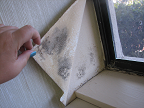
professional mold testing priceThe low price results from several factors.  First of all, the personnel may not have the extensive education, training, and certifications that the higher priced testing companies do.  Second, they may not have to adhere to a code of ethics of a professional certification board.  Third, the types and numbers of samples may be different.  Finally, the report and consultation budget may be cut drastically.  In conclusion, it is a case of apples and oranges – the two cannot be compared.

Mold Testing Prices

The prices can be significantly different.  For example, in our market the low price is $300 for a “mold test” in a small to medium size home or office.  The realistic price to test properly is $750 to $1,150.  That is quite a difference!  It is, but the devil is in the details.  First, the low price work is:

  • 2 air spore traps inside & 1 outside
  • brief report with lab results
  • scant or no interpretation of results

In comparison, the realistic priced work includes:

  • 2 air spore traps & 2 air culture samples inside + 2 of each outside
  • 2 surface tape samples in AC system
  • temperature & relative humidity at same 4 air stations
  • inspection for water intrusion & visible mold
  • moisture mapping with infrared camera & moisture meter
  • American Industrial Hygiene Association (AIHA, aiha.org) accredited lab analysis
  • detailed report with interpretation of results & consultation

That is quite a difference!

Credentials

The low priced company’s staff most likely does not stack up to the realistic priced company.  The staff members may not all have 4 year degrees and if they do, the degrees are not necessarily in biology or a related field.  Both companies should have Florida licensed Mold Assessors (required by law & officially called Mold-Related Services Assessors).  However, the low priced company’s staff will not have a Certified Industrial Hygienist (CIH, American Board of Industrial Hygiene, www.abih.org).  The credential is extremely difficult to get but courts recognize CIHs as expert witnesses.  That means their work is court defensible which is extremely important in today’s litigious society.  No one plans to go to court, but many end up there!

Final Note

ESC is not the low priced company and it does mold testing right.  The firm has taken over more than one job from owners who realize they just threw their money away on low priced testing.  There is even more information in papers on our web site.  They are in our blog section and can be found by clicking on  https://www.escflorida.com/esc-services/building-testing/

Environmental Safety ConsultantsSo there is a discussion of point counting building materials for asbestos.  If you need any assistance, ESC (www.escflorida.com) is here.  On staff, we have a board Certified Industrial Hygienist (CIH) and three Florida licensed Mold Assessors.  ESC has been providing mold testing services to our clients for over thirty years.  We have the credentials and experience to help you with your asbestos needs.  Our firm is just a telephone call (800-226-1735) or an e-mail away (escinc@verizon.net).  Contact us today!
Asbestos Point Counting

Asbestos Point Counting Defined

Point counting is a detailed laboratory method that determines the actual asbestos content of friable building materials.  It shows if the content is greater than 1%.  The federal asbestos regulations for building renovations and demolitions allow point counting.

The actual regulation is found in Chapter 61.145 of Title 40 of the Code of Federal Regulations, otherwise known as 40 CFR 61.145.  Chapter 61 contains the NESHAPs rules (National Emission Standards for Hazardous Air Pollutants).  NESHAPs covers quite a few hazardous air pollutants and asbestos is addressed in Subpart M of Chapter 61.  NESHAPs is enforced by the U.S. Environmental Protection Agency (EPA, www.epa.gov).  State agencies such as the Florida Department of Environmental Protection (www.floridadep.gov) also enforce it.

When to Asbestos Point Count

Do point counting when the material is friable and the initial results are less than 10%.  This more detailed procedure tightens the statistics, providing a more accurate concentration.

Options

What are the options?  First, assume the initial results are correct and the material contains more than 1% asbestos.  Next, abate it prior to disturbance (renovation or demolition).  Otherwise, point count it.

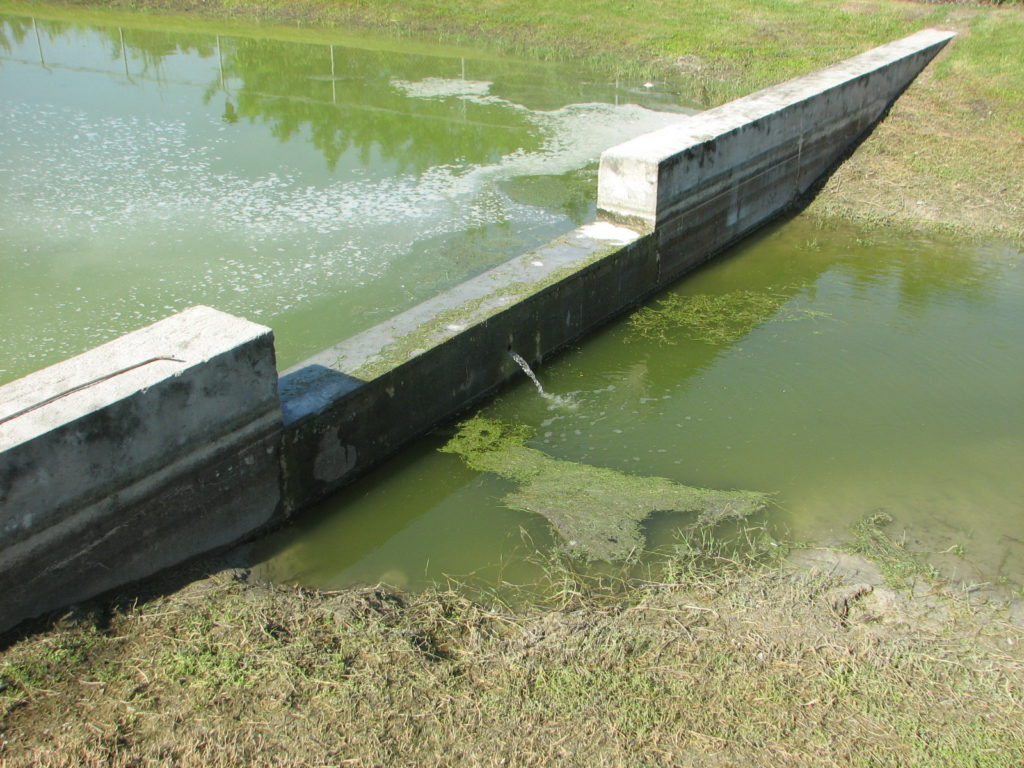
asbestos point counting rulesThe decision involves money.  The cost of point counting a few samples is a few hundred dollars.  But, the cost of abatement is a few thousand dollars.  In either case, removing the material can cause an inhalation hazard for the workers and occupants.  This is true even for asbestos concentrations less than 1%.  That number is a regulatory number, not a safe, no exposure number.
Decision

Like a lot of construction issues, point counting is a business decision.  The building owner and occupants make the decision, with the building contractor, licensed asbestos consultant, and licensed asbestos contractor.  Consider the potential outcomes.  For example, the owner and occupants may say they want it removed properly by a licensed asbestos contractor whatever the concentration is.  Alternatively, they may not care about the potential exposure and opt for the building contractor to carefully remove it it if it contains less than 1% asbestos.

Environmental Safety ConsultantsSo there is a discussion of point counting building materials for asbestos.  If you need any assistance, ESC (www.escflorida.com) is here.  On staff, we have a Florida Licensed Asbestos Consultant and board Certified Industrial Hygienist (CIH).  ESC has been providing asbestos consulting services to our clients for over thirty years.  We have the credentials and experience to help you with your asbestos needs.  Our firm is just a telephone call (800-226-1735) or an e-mail away (escinc@verizon.net).  Contact us today!

Can I Reuse My N-95 Masks?

Introduction

This paper is the fourth in a series on the pandemic disease, COVID-19. The first paper focused on safely reopening your business.  The second one concerned face masks, the primary PPE (personal protective equipment). The third paper involved examining the exposure routes. Finally, this one will discuss the reuse of N-95 masks. This has been of great importance during the current pandemic.  That is due to shortages of N-95s and the need to protect everybody.  Further, health care workers and other front line workers must be protected from infected and asymptomatic carriers of the SARS-CoV-2 novel corona virus.

N-95 Masks Not Designed for Reuse

Do not reuse N-95s. Wear them one time and throw them away. Their paper cloth-like material does not stand up well when washed or disinfected. The filtration can be reduced and put the wearer at risk. The elastic bands and the filter material may become distorted.  Then the mask does not seal properly to the face or fit properly. This allows air leakage and defeats the purpose. Also, viruses, bacteria, and physical particles can become trapped on the outside of the filter material and lead to infection when touched.

Short Supply has Forced the Issue

Necessity is the mother of invention! And because the N-95 has come into such demand, we have been forced to explore reuse of these disposable masks. The scientists and regulatory agencies have explored various options and made emergency concessions for the reuse of N-95s. Federal agencies involved include the Center for Disease Control (CDC, www.cdc.gov), Occupational Safety & Health Administration (OSHA, www.osha.gov), and the Food and Drug Administration (FDA, www.fda.gov).

N-95 Masks Reuse Guidelines

The simplest method is to store the N-95 in a closed paper bag and not reuse it until 5 days later. This is not true disinfection but it banks on the virus dying outside of the body, which is typical of most micro-organisms. The CDC identifies the following disinfection methods:

  • Moist Heat (think autoclave)
  • Ultra-violet Light
  • Hydrogen Peroxide

Only trained scientists and medical personnel can use these disinfection procedures. Examine the masks for distortion and damage, then fit test them on personnel.  Just remember – when in doubt, throw it out!

As the Virus Turns

That sums up reuse and disinfection at this time. But stay tuned, because new information and data come in every day!

Environmental Safety ConsultantsSo there is a discussion of reusing N-95s. If you need any assistance, ESC (www.escflorida.com) is here. We have a board Certified Industrial Hygienist (CIH) on staff and have been providing respiratory protection services to our clients for thirty years. ESC has the credentials and experience to help you with your respiratory protection needs. We are just a telephone call (800-226-1735) or an e-mail away (escinc@verizon.net). Contact us today!

Stormwater Pollution Prevention Plan (SWPPP)

Background 

So far, we have provided several blog posts on or related to environmental engineering, which is provided Developing a Stormwater Pollution Prevention Planby environmental consulting firms like ours, Environmental Safety Consultants, Inc. (ESC). We provided information on environmental permits, then went into an overview of environmental engineering. Next, we addressed industrial wastewater and, finally, air emissions control provided by an air engineer. There was also a blog post discussing Florida NPDES (National Pollutant Discharge Elimination System) Industrial Stormwater requirements. Now we will discuss the Stormwater Pollution Prevention Plan (SWPPP).

Stormwater Pollution Prevention Plan (SWPPP)

The current paper will discuss environmental engineering required for an SWPPP (Stormwater Pollution Prevention Plan). The regulatory requirements are provided by both the U.S. EPA (Environmental Protection Agency, www.epa.gov) and the FDEP (Florida Department of Environmental Protection, www.floridadep.gov). The requirements discussed herein primarily cover manufacturing and industrial facilities with SIC (Standard Industrial Classification) Codes 21 – 39 with specific exposure to stormwater. 

Objective

The objective of the Stormwater Pollution Prevention Plan is self-evident from its name. Basically, the plan prevents pollution of stormwater so it does not impact receiving waters. Otherwise, it can impair the biological organisms and public health. 

Components of Stormwater Pollution Prevention Plan

In preparing the SWPPP, the environmental engineer first identifies the facility and describes its operations, location, and receiving surface waters. Next, the engineer gathers information and data in the following areas to assess the facility’s impact to stormwater: 

  • Topography, runoff, & discharge point(s) 
  • Material inventory, quantities, & exposure 
  • Significant spills or leaks last three years 
  • Non-stormwater discharges
  • Pollutant sources & specific parameters 
  • Best Management Practices (BMPs) to control pollutants 

Based on the results of the preceding, the environmental engineer discusses the findings with the client, then prepares the SWPPP and submits it for review. It is important that the client be able to implement and use the plan to reduce or eliminate pollutants in the facility’s stormwater runoff. 

Implementation 

The client’s management must endorse the SWPPP and sign it as documentation. The client forms a Pollution Prevention Team (PPT) and identifies it in the SWPPP. Team members and other personnel receive training. Management commits resources to attain the plan’s objective and implements the BMPs selected. The PPT completes visual monitoring of the stormwater discharge quarterly and, possibly, laboratory analysis during the second and fourth years of the five year permit. The client keeps all records in the SWPPP and, thus, it is a living document. 

Environmental Safety ConsultantsSo there is a discussion of the preparation of an SWPPP by an environmental engineer! If you need any assistance, Environmental Safety Consultants (www.escflorida.com) is here. We are a Florida licensed environmental consulting and Florida licensed environmental engineering firm with a P.E. on staff. We have the credentials and experience to help you with your SWPPP.  Contact us today (https://www.escflorida.com/contact/). We strive to reply to all contacts promptly!

Environmental Engineering for Air Emissions

Background on Environmental Engineering for Air Emissions

Environmental engineering for air emissions

In three previous papers we dealt with an overview of environmental engineering, industrial wastewater permits, and industrial wastewater environmental engineering. In this paper, we will discuss environmental engineering required to address air emissions to the outside environment.

To explain further, these emissions to the outside environment result from manufacturing and industrial operations. And, these emissions fall into two categories of emissions. Firstly, emissions can come from one point source such as a smoke stack. Secondly, emissions can come from a non-point source. Thuse, these are fugitive emissions. In further explanation, these fugitive emissions result from processes typically inside a building or in an outside designated area.

Environmental Engineering and the Air Engineer

Environmental engineering and the Air Engineer are critical to the process. Firstly, the engineer determines the best reasonably achievable control technology to minimize the emissions to the environment outside of the facility. The engineer does this by designing, testing, and adjusting the controls. This is the engineering component. Secondly, the engineer is the other component. In Florida, a Florida licensed Professional Engineer (P.E.) signs and seals applications for Title V Air permits and Federally Enforceable State Operating Permits (FESOPs). A P.E. in Florida limits his or her services to areas that he or she has the required education, training, and experience. This Air Engineer knows emissions and has the experience to provide consulting services in the air emissions area.

Identify the Pollutants in the Air Emissions

To engineer the air emissions controls, the engineer has to know the process generating the emissions. Firstly, the environmental engineer must review the raw materials, the industrial or manufacturing process, the resultant air emissions, and the control options. Following are a few pollutants which may be of concern: 

  • Particulate Matter (physical particles or dust)
  • Nitrogen Oxides
  • Sulfur Dioxide
  • Carbon Monoxide
  • Volatile Organic Compounds (VOCs)
  • Ozone
  • Lead

All of these except VOCs are criteria air pollutants established by the U.S. Environmental Protection Agency (EPA).  Each type of pollutant may require a different environmental engineering design to remove or reduce it before being emitted to the outside environment.

Cleanup is the Goal of Air Emissions Permits

The goal is to clean up the air so the pollutants are eliminated or below State standards prior to emission. These standards are thresholds for public health concerns. If the pollutants are below these criteria, there is not a public health concern, but there still may be a concern for unborn babies (pregnant women), children, the elderly, and individuals with certain lung conditions, such as emphysema, asthma, chronic obstructive pulmonary disease (COPD), etcetera. 

Design the Air Emissions Control

The control design is selected to address the pollutants. Following are a few examples: 

  • Alternative raw materials 
  • Industrial process modifications 
  • Filters (cloth, baghouses) 
  • Cyclones (gravitational) 
  • Air scrubbers 
  • Precipitators (electrostatic) 
  • Equipment maintenance and cleaning 

Role of Engineer for Air Emissions Permits

What is the role of the Air Engineer? Firstly,the engineer reviews the industrial process, including materials and chemicals, generating the air emissions. After that, the engineer evaluates several control design options. So, the engineer runs calculations to determine the best most cost-effective control. After that, the engineer prepares and submits the air permit application to FDEP and, if required, the County. Then, the engineer provides additional information requested by the FDEP and County. Once the regulatory agencies are satisfied, the engineer reviews the permit to make sure that it meets good engineering practice and is manageable for the client. And, if requested, the engineer monitors the treatment process in light of the permit conditions.

Conclusion

So there is a discussion of air emissions environmental engineering and what the environmental engineer’s role is! For further assistance, Environmental Safety Consultants (www.escflorida.com) is here. ESC is a Florida licensed environmental engineering company with a P.E. on staff. We have the credentials and experience to help you with your air emissions permit needs. We service Bradenton, Sarasota, St. Petersburg, Clearwater, Tampa, and Fort Meyers. That includes Manatee, Pinellas, Hillsborough, Lee and other counties from Pensacola (Escambia County) to Key West (Monroe County). So,  Contact ESC and get a reply promptly!


Environmental Safety Consultants

Environmental Engineering For Industrial Wastewater

Environmental Engineering for Industrial Wastewater

In two previous blog posts we dealt with an overview of environmental engineering and industrial wastewater permits. In this paper, we will discuss environmental engineering required to address ESC - Environmental Engineering for Industrial Waste Waterindustrial wastewater. To explain, this is the engineering required to treat wastewater so it does not pollute surface waters, or so it is within tolerable limits and virtually has no impact. And so, environmental engineering  determines the best reasonably achievable control technology to treat wastewater.  To accomplish this, the environmental engineer designs, tests, and adjusts the treatment process.
In Florida, a licensed Professional Engineer (P.E.) signs and seals NPDES Industrial Wastewater permit applications. To do so, the engineer only practices in areas that he/she has the required education, training, and experience. That means that the P.E. must have industrial wastewater knowledge and experience.

Start with the Pollutants

The pollutants in the wastewater determine the treatment. The environmental engineer must become familiar with the industrial materials and processes generating the wastewater. Following are a few pollutants which may be of concern:

  • Heat (thermal)
  • Nutrients (phosphorus and nitrogen)
  • Biochemical Oxygen Demand (e.g., organic matter)
  • Heavy Metals
  • Volatile Organic Compounds (VOCs)
  • Radioactivity
  • Particulates resulting in Turbidity

The actual pollutants determine the engineering design for treatment.

Clean It Up

The goal is to clean up the wastewater so the pollution is below State standards before discharge. However, sometimes mixing zones are approved if the concentration exceeds the standard at the discharge point.  To explain, the discharge mixes with the receiving water so that downstream it is below State standards. Keep in mind that FDEP (Florida Department of Environmental Protection, www.floridadep.gov) approves all mixing zones in Florida. Just remember, FDEP requires a very good reason why the State standard cannot be met at the discharge point.

Treatment Design

The treatment design addresses the pollutants. Here are a few examples:

  • Cooling of heated (thermal) wastewater
  • Primary and secondary settling of particles in pond or tank
  • Aeration to allow microorganisms to degrade organic matter
  • Chemical additives to oxidize or coagulate select pollutants
  • Percolation to allow removal in the soil
  • Filtration

Role of the Environmental Engineer

The environmental engineer completes several tasks.  First, he/she reviews the industrial process, including materials and chemicals, that create the industrial wastewater. Next, he/she  evaluates several treatment designs and runs calculations to determine which one will work best and will be affordable. Then, the engineer prepares the permit application and submits it to FDEP and/or the County.  Next, the engineer provides additional information requested.  Finally, after the FDEP or County issues the permit, the engineer makes sure it meets good engineering practice and will work.  After that, the engineer monitors the treatment process in light of the permit conditions, if requested.

So, now you know how environmental engineering is used to treat industrial wastewater! If you need any assistance, Environmental Safety Consultants
(www.escflorida.com) is here. ESC holds a Florida license in engineering and has a P.E. on staff. ESC has the credentials and experience to meet your industrial wastewater needs.  Contact ESC today (https://www.escflorida.com/contact/). ESC strives to reply to all contacts promptly!

Industrial Hygiene Hazard Recognition Example

Industrial Hygiene Blogs So Far

This is the fourth in a series of blogs on industrial hygiene (IH).  The first one explained that industrial hygiene was the recognition, evaluation, and control of hazards in the workplace.  The second blog defined a hazard as a source of danger or an agent which has the potential to cause to harm to a vulnerable target.  Sources of hazards were identified in manufacturing, construction, maritime, office, and other workplaces.  Different types of resources were identified such as guidelines provided by the U.S. Occupational Safety & Health Administration (OSHA, www.osha.gov) and the National Institute of Occupational Safety & Health (NIOSH, www.cdc.gov/niosh).  The third blog focused on the recognition or identification of hazards.  And, this blog will walk you through an example of hazard recognition for a specific operation.

IH Hazard Recognition Example

industrial hygiene hazard identificationLet’s say the operation is spray painting a finished metal part before shipping.  The part comes into the paint spray booth already deburred and sanded.  It is ready to paint.  The operation involves the following tasks:
  1. Clean/degrease the part
  2. Allow part to dry
  3. Fill paint pot with primer
  4. Spray part with primer
  5. Allow part to dry
  6. Sand primed surface to smooth it before final coat of paint
  7. Clean sanding debris from part
  8. Fill new paint pot with finishing paint
  9. Spray paint with finishing paint
  10. Allow to dry then send to shipping department
  11. Clean out spray guns and paint pots

So what are the hazards that you can identify?  Steps 1 and 2 could present an inhalation and skin absorption hazard due to the use of solvents containing volatile organic compounds (VOCs).  This could also be true for Steps 3, 4, 5, 8, 9, 10, and 11 depending on the chemicals present in the primer and finish paint.  Additionally, during spraying, there could be a hazard associated with particulates.  This is also true of the sanding and cleanup in Steps 6 and 7.  There also may be metals of concern in the sand paper.

In terms of recognizing the specific potential hazards of most concern, that will depend on the constituents in the cleaner/degreaser, primer, sandpaper, and finish paint.  Without that information, the potential hazards of most concern will likely be vapors and particulates from the spraying steps.  How can you know?  That is where the industrial hygiene evaluation comes in.  But that will be covered in our next blog.

esc Industrial RecognitionSo that concludes our discussion of hazard recognition in industrial hygiene.  In our next blog in this series, we will discuss the evaluation of potential industrial hygiene hazards.  That process often includes industrial hygiene testing.  In the meantime, if you need any help, Environmental Safety Consultants (www.escflorida.com) is here.  We are a Florida licensed environmental engineering company with a CIH on staff.  We have the credentials and experience to help you complete your industrial hygiene project.  We have a proven track record with a Florida licensed environmental engineer and mold assessors, plus degreed environmental scientists on staff.  We specialize in industrial hygiene, indoor air quality, asbestos, lead paint, silica, noise, and more.  We are just a telephone call (800-226-1735) or an e-mail away (escinc@verizon.net).  Contact us today!

Hazard Recognition in Industrial Hygiene

Industrial Hygiene Recap

This is the third in a series of blogs on industrial hygiene.  The first one explained that industrial hygiene was the recognition, evaluation, and control of hazards in the workplace.  The second blog defined a hazard as a source of danger or an agent which has the potential to cause to harm to a vulnerable target.  Sources of hazards were identified in manufacturing, construction, maritime, office, and other workplaces.  The current blog will focus on the recognition of hazards.

What is Hazard Recognition?

hazard recognitionThe application of the term recognition in the industrial hygiene field is the identification of a hazard.  It may be one that is obvious and you are familiar with or it may be hidden and unknown to you.  An example of a known obvious hazard would be a dust cloud surrounding a worker dry sawing concrete.  Most people would recognize the dust as being a potential respiratory hazard and many would take it a step further and recognize that the silica most likely in the dust can cause silicosis.  On the other hand, a hidden hazard may be an oxygen deficient atmosphere in a confined space.  You cannot see the oxygen deficiency and you may not be aware that it is a potential hazard.  However, the atmosphere could result in asphyxiation and death.
How Do You Recognize Hazards?

First, review the task or operation.  Analyze each step from start to finish.  Begin with the materials, equipment, and procedures.  Review available information and data on Safety Data Sheets, Technical Data Sheets, hazardous materials guides and handbooks, and peer reviewed published literature.  Of particular assistance are the guidelines issued by the U.S. Occupational Safety & Health Administration (OSHA, www.osha.gov) and the National Institute of Occupational Safety & Health (NIOSH, www.cdc.gov/niosh).  You should also discuss the operation with peers, cohorts, agency personnel, laboratory directors, and others.  Identify regulatory and industry limits for chemicals and dust in the air.  Break the task or operation down into sequential steps (i.e., like a manufacturing method).  Identify the hazards associated with each step and determine which ones are most important in terms of the likelihood of their occurrence and the severity of their hazards.

What Does All That Mean?

Well, a picture (aka an illustration) is worth a thousand words.  So, you need an example.  And that will be the subject of our next industrial hygiene blog.

esc Hazard RecognitionSo that is what hazard recognition in industrial hygiene is.  In our next blog in this series, we will walk you through an example of identifying the potential hazards in an actual industrial operation.  After that, we will delve into evaluating the hazards.  That process often includes industrial hygiene testing.  In the meantime, if you need any help, Environmental Safety Consultants (www.escflorida.com) is here.  We are a Florida licensed environmental engineering company with a CIH on staff.  We have the credentials and experience to help you complete your industrial hygiene project.  We have a proven track record with a Florida licensed environmental engineer and mold assessors, plus degreed environmental scientists on staff.  We specialize in industrial hygiene, indoor air quality, asbestos, lead paint, silica, noise, and more.  We are just a telephone call (800-226-1735) or an e-mail away (escinc@verizon.net).  Contact us today!

Industrial Hygiene Hazards

What is a Hazard in Industrial Hygiene?

In our last blog on industrial hygiene and a CIH (Certified Industrial Hygienist) we explained that industrial hygiene concerns the recognition, evaluation, and control of hazards in the workplace.  This is best handled by a CIH who has the education, training, experience, and credentials.  Further, the courts recognize a CIH as an expert in the field.  This blog deals with the recognition of hazards.

Definition of Hazard

Merriam-Webster dictionary (www.merriam-webster.com) defines hazard as a source of danger.  Wikipedia (en.wikipedia.org) says that a hazard is an agent which has the potential to cause harm to a vulnerable target.  In occupational health and safety, it concerns the potential to injure workers or cause health problems.  Therefore, in industrial hygiene the hazard could be due to the operation or task, the materials, and the work environment.  Sources of hazards can be chemical, biological, physical, electromagnetic, or radioactive, among others.  Examples are solvents, viruses, mold, bacteria, particulates, ultraviolet light, microwaves, heat, absence of oxygen, and more.  They can be of natural origin or manmade.  Ultraviolet rays from the sun are natural and present an occupational health hazard for lifeguards.  The use of solvents to clean machine parts represents a manmade hazard source.

Manufacturing Hazards

Since industrial hygiene began with manufacturing, we will start there.  Hazards can occur from operations, raw materials, chemicals used, noisy equipment, heat, and the workplace atmosphere.  Operations creating hazards include cutting, grinding, blasting, fabricating, cleaning, and painting.  Chemicals with hazards can be solvents, epoxies, cleaners, pesticides, and paint.  Particulates can be generated from blasting, sanding, painting, welding, and soldering.  Noise can be generated from machines, compressed air usage, boom boxes, airplanes, trucks, and more.  And there are certainly more which we have not even mentioned.

Construction Hazards

Industrial Hygiene HazardsMany of the industrial hygiene hazards in construction are the same as in manufacturing.  However, certain sources are more unique or prevalent due to the nature of construction.  Examples are concrete installation, finishing, and removal; paver installation; remodeling and demolition involving lead based lead paint, asbestos containing materials, bird feces, mold, and bacteria; digging in soil; and painting.
Maritime Hazards

The focus here is in shipyards and boatyards.  Sources of hazards could include all of the above.  Further, heat and oxygen deficient atmospheres can be even more prevalent than in manufacturing or construction.  Asbestos and lead based paint are often common sources.  And of course noise inside boats and ships can be major due to tight quarters.

Office & Other Workplace Hazards

And finally, there are sources of hazards in offices and other workplaces.  These sources can affect indoor air quality on a short term or long term basis.  Janitorial chemicals and vacuums can have an immediate effect on workers.  The health effect may be acute or immediate, or chronic or long term.  Damp buildings and mold can affect hyper-sensitized individuals.  Office machines can be sources of volatile organic compounds (VOCs), including formaldehyde.  Adjacent industrial operations or remodeling can be sources of the construction and manufacturing hazards listed above.

ESC - Industrial Hygiene HazardsSo there are the details on industrial hygiene sources of hazards in various workplaces.  Stay tuned for our next in depth blog on the process of identifying specific hazards from given operations.  In the meantime, if you need any help, Environmental Safety Consultants is here.  We are a Florida licensed environmental engineering company with a CIH on staff.  We have the credentials and experience to help you complete your industrial hygiene project.  We have a proven track record with a Florida licensed environmental engineer and mold assessors, plus degreed environmental scientists on staff.  We specialize in industrial hygiene, indoor air quality, asbestos, lead paint, silica, noise, and more.  We are just a telephone call (800-226-1735) or an e-mail away (escinc@verizon.net).  Contact us today!

Environmental Permits Overview

What Environmental Permits are there?

Environmental Permits Bradenton and Sarasota

environmental permits.  Here are just a few:

Developments

  • Wetlands
  • Endangered Species

Industry & Construction

  • Air Permits for Air Discharges from Industry
  • Wastewater Discharge, Sanitary and Industrial
  • Hazardous Wastes, Transportation, Disposal & Storage
  • Stormwater, Retention Ponds, Detention Ponds, Stormwater Runoff – Construction and Industry

Other

  • Septic Tanks
  • Drinking Water, Private Wells and Community Supplies
  • Solid Wastes, Landfills & Incineration

Permit Needs

You have to review your planned operation to see if it will require environmental permits.  Then, you have to decide what part of the environment it may impact.  For example, will it impact air, water, or land?  To further explain, will it be changing the existing site?

Example 1

Example 1 is environmental permits for building and paving a site. As a result, that activity decreases percolation of rain water into the ground.  Because of that, more stormwater will run off the site. So, that could require a stormwater retention or detention pond permit. Further, it could require an NPDES  permit for industrial sites. Additionally, those sites may have to prepare a Stormwater Pollution Prevention Plan (SWPPP).

Example 2

Example 2 is environmental permits for certain industrial facilities.  In addition to the stormwater permits and plan identified in Example 1 above, there are other permits. For instance, sewer discharge permits may be required. Further, air permits may be needed.  Finally, are used oil and hazardous waste requirements.

Responsibility

Responsibility for acquiring the permits can fall on many different parties. For example, it can include developers and builders. Additionally, it may include banks, attorneys, architects, or engineers. Finally, it can include manufacturers, industrial facilities, hospitals, crematories, municipalities, and many more!

Lifelines

If you need lifelines, who should you call?  Firstly, some of the best lifelines are your associates. So, why is that true? Because their knowledge base can be a good starting point.  And so, who are your associates? To begin with, they may be your co-workers, partners, or managers. Next, outside of them, for instance, are your attorney, professional colleagues, and environmental engineering companies.  Finally, those associates may direct you to agencies or may contact the agencies themselves on your behalf.

Agencies

There are several key agencies which typically administer the various types of environmental permits.  Firstly, are local agencies. For example, these may include the Water Management Districts, Florida Department of Environmental Protection (FDEP), counties, and cities.  Secondly, are federal agencies. For example, these may include the U.S. Environmental Protection Agency (EPA, www.epa.gov) and U.S. Army Corps of Engineers (USACE).  But, just be careful what you say.  Because, it is all in the presentation!

Let ESC Help

ESC Environmental Permits Overview

In conclusion, there are many permits identified in this Overview of Environmental Permits! But just remember that ESC is a Florida licensed engineering company with the experience and knowledge to help you. That is because our specialty is permits concerning air emissions, industrial discharges, NPDES stormwater, and more. We service Bradenton, Sarasota, St. Petersburg, Clearwater, Tampa, and Fort Meyers. That includes Manatee, Pinellas, Hillsborough, Lee and other counties from Pensacola (Escambia County) to Key West (Monroe County). So,  Contact ESC and get a reply promptly!