
I Don’t have to Worry
The buyer is elated – “No Phase I! Celebrate!” Really? Are you sure that’s a good thing? The buyer’s response is quite often something to the effect of: “It must not be a concern if the bank isn’t concerned.” To which we usually respond “Not necessarily!”
See, quite often the bank is not concerned, because if the loan recipient goes bankrupt trying to pay for a cleanup on down the road, the bank may just write off the loan as bad debt. They are not liable for the cleanup and that came from the 1996 Amendments to CERCLA (Comprehensive Environmental Response, Compensation, & Liability Act, known as Superfund, (www.epa.gov). That gave banks a “safe harbor” from becoming a Potentially Responsible Party (PRP). Thus, the banks cannot be held responsible for a cleanup just because they loaned money on the property. Of course, they have to be very careful in their involvement with the property and cannot actively manage it.
Suddenly, it doesn’t look like such a great favor the bank did for the buyer. And perhaps, the buyer had selective hearing at the time. A savvy banker may say “Officially we are not requiring a Phase I, but we do recommend you do one, for your own protection.” And, regretfully, the buyer only heard the first part of the banker’s statement.
It’s Part of Your Due Diligence
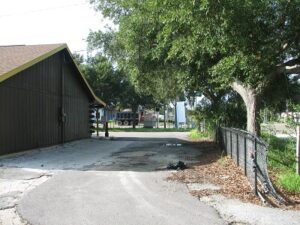 Forget the bank! As the buyer, you exercise your due diligence to check out other aspects of the property – title, back taxes, infringements, rights-of-way, utilities, building systems, structural integrity of the building, and probably many more things. But you don’t want to know if there is a solvent plume under the building? Something like that can sicken occupants from what is known as vapor intrusion. But, you say, “The building is in great condition and in good repair, that vapor intrusion situation is highly unlikely.” On the contraire, it is highly likely. There are always cracks, crevices, and breaches that vapors can follow into the building. And how about that expensive addition you are going to make? It may get much more expensive or become impossible when you attempt to deal with the contamination beneath the building.
They Can’t Make Me Clean it Up!
You are striking out again. They can make you clean it up. In some cases, they can allow you to leave the contamination in place but they can also require a restrictive covenant be placed on your deed. Getting to that point can be expensive because they can require a Phase II Environmental Assessment, that is, testing of the soil and groundwater at numerous depths and locations to define the plume’s degree of contamination, horizontal extent, and lateral extent. Once the covenant is on the deed, it restricts your use and future buyers’ uses of the property. It can suddenly become very hard to sell the property.
Savvy Buyers Do Phase I’s
That is what we have seen over the past twenty years. The Phase I Assessment is an important part of their due diligence, regardless of the bank not requiring it. As a matter of fact, we have quite a few clients who start with the Phase I because if it shows contamination or a strong potential for contamination, they cut their losses, spend no more on due diligence, and move on to the next property.
Conclusion
You should seriously consider if you want to omit a Phase I Site Assessment. You may save a couple thousand dollars up front but it could turn into losses in the hundreds of thousands of dollars in the future.
Further Assistance

If you need any help, Environmental Safety Consultants (www.escflorida.com) is here. We are a Florida licensed environmental engineering company with a Florida licensed Professional Engineer and certified Environmental Assessors on staff. We have been completing Environmental Assessments since they first started being done in 1988. We have the credentials and experience to help you complete your Environmental Site Assessment project.
We are just a telephone call (800-226-1735) or an e-mail away (escinc@verizon.net). Contact us today! We are your Phase I Environmental Assessment Company.
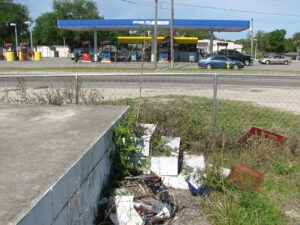 Let’s use the gas station example. A gas station today is not necessarily a gas station yesterday. In the 1950’s to mid-1970’s, a gas station was normally a full service station, not the convenience store that sells gasoline and diesel fuel today. Not only did they sell fuel from underground storage tanks, but they quite often dumped used oil, chlorinated carburetor cleaner, and other petroleum based wastes into a used underground storage tank. And, yes, those tanks leaked just like the fuel tanks. At the end of the day, they often hosed down the floor of the repair shop and squeegeed it out the door onto the pavement, grass, dirt, road, and storm drains. Oh, by the way, they also had hydraulic oil tanks underground for the lifts, which also leaked.
 So you had your Phase I Environmental Site Assessment (Phase I) done and Recognized Environmental Conditions (RECs) were found. You have decided to proceed with the transaction but you now need a Phase II ESA (Phase II) to fulfill your due diligence in determining if the site is or could be contaminated from usage of the site or properties in the vicinity. On the financial end, you and the seller have decided who will pay for the Phase II. This could mean that the seller will pay for it all, you will pay for it all, or the two of you will share the expense. Many times if you are paying any part of it, there is a proviso that the seller will reimburse you in full if contamination is found and you cancel the trans-action. The specifics are provided by your attorney.
 Once you have selected a firm, discuss the Scope of Work, turnaround, and terms. The Scope should be designed to specifically investigate the RECs that were found during the Phase I. This includes the media type and the contaminant types. The media may include soil, surface water, sediments, and groundwater. One or more of these media may need to be included. Types of contaminants include gasoline, diesel fuel, used oil, solvents, pesticides, heavy metals, and perc (perchloroethylene, a dry cleaning chemical), among others. There may be concerns with different contaminants in different locations on the site. These locations may have different media to be tested.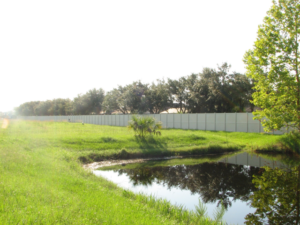
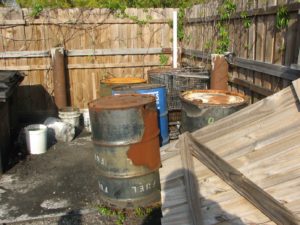 Environmental Site Assessments are conducted in phases. A Phase I ESA includes an inspection of the site and properties in the vicinity; review of environmental regulatory records, data, permits, and complaints; interviews of the buyer, seller, managers, and regulatory personnel; review of current and historical aerial photographs of the site and vicinity; review of environmental title search back to 1940; and review of nearby landfills, surface waters, and U.S. Geological Survey (USGS) topographical maps.